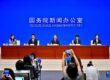

2026 AID Silver Industry Innovation Conference was successfully held today!

2026 AID Silver Industry Innovation and Development Conference Exploration, Innovation, Leadership: New Momentum of Silver Economy and Urban Practice
On June 4,“2026 AID Silver Industry Innovation and Development Conference”was grandly held at the Kerry Hotel Pudong, Shanghai.
The conference, themed ‘Exploration, Innovation, Leadership: New Momentum of Silver Economy and Urban Practice,’ brought the latest interpretation of industry development trends with a strategic perspective. It invited over a dozen leading enterprises from the national elderly care industry and silver economy sectors to share insights on topics including new momentum of silver consumption, elderly finance innovation, technology empowerment, elderly products industry upgrading, silver physical store operations, and healthy diets.
2026 AID Silver Industry Innovation and Development Conference
In the morning keynote sessions on the first day, we focused on two main themes: silver finance and elderly care technology. The guests’ sharing was strategic and broad in vision, outlining a macro picture of the silver economy moving from concept to practice. The morning session of this conference was brilliantly hosted by Wang Haibo, chief host of Shanghai Media Group. Keynote Host: Wang Haibo, Chief Host of Shanghai Media Group How Do We Serve the Elderly Today? – Some New Thoughts on Aging Qin Shuo, Humanities and Financial Observer, Initiator of Qin Shuo’s Circle, Co-Director of China Business Civilization Research Center Currently, China is rapidly entering a deeply aging society. The silver economy has emerged from the field of social security to become a new engine driving high-quality economic development. Mr. Qin Shuo, with his long-accumulated perspective of humanities and finance observation, penetrates macro data and micro phenomena, analyzes the profound changes in consumption structure and business logic behind the silver economy, presenting a grand picture of the silver economy moving from ‘providing for the elderly’ to ‘enjoying old age,’ offering forward-thinking insights and inspirations for innovative practices in the silver industry.
Actively Respond to Population Aging and Solidly Do the Work of Elderly Finance Jian Na, Deputy Director General of Credit Market Department, People’s Bank of China Developing elderly finance is an inevitable choice to cope with population aging. Currently, the People’s Bank of China has preliminarily built an elderly finance system through improving top-level design and establishing special refinancing tools. Next, to do well in elderly finance, we must invest in both things and people, support the development of related fields in the elderly care industry, and provide differentiated financial services to elderly groups with different self-care abilities; we must also coordinate development promotion and risk prevention, shift financial support from infrastructure to operational capability enhancement, and guard against risks; and we must coordinate government guidance with social operation to form a new development pattern where government coordination and market efficient allocation work together.
‘Voluntary Guardianship + Elderly Service Trust’ – Shanghai Practice of Elderly Finance Innovation Cui Bingwen, Party Committee Member and Vice President of Shanghai Pudong Development Bank, Chairman of Shanghai International Trust Co., Ltd. SPDB and Shanghai Trust leverage the legal advantages of the trust system in asset segregation, earmarked use, and directional payment to precisely solve core pain points such as ‘no one manages, misappropriation, and no one to entrust after death.’ Shanghai is deeply aging, and traditional guardianship models are insufficient. Shanghai pioneered the ‘voluntary guardianship + elderly service trust’ three-in-one model: the voluntary guardian is responsible for personal care and medical signatures, and the trust company pays elderly care costs as instructed, achieving separation of money management and personnel management with mutual checks and balances. In emergencies, funds can be transferred without court rulings. Shanghai Trust has launched standardized ‘Anyang Trust Accounts’ with accessible thresholds and customization, while also building a service ecosystem together with medical institutions, communities, law firms, etc., contributing replicable ‘Shanghai experience’ to national elderly finance innovation.
Technology Empowers Silver Economy, Innovation Leads Industry Future Tan Ruicong, Deputy District Mayor of Minhang District, Shanghai Minhang District is taking elderly care technology innovation as an important lever to cultivate new quality productive forces in the silver economy, relying on the ‘Da Lingang’ Science and Technology Innovation Functional Area to build the Shanghai Elderly Care Technology Industrial Park. In specific practice, Minhang District constructs a high-standard elderly care technology industrial park, issues special policies to precisely empower enterprise clustering and technological innovation, and builds a national standard platform. Meanwhile, it actively builds a three-level smart scene matrix covering institutions, communities, and homes, pushing technology products from labs to the elderly. In addition, it focuses on building a collaborative ecosystem integrating government, industry, academia, research, application, and finance, linking universities for technical breakthroughs, establishing special funds for elderly care technology, and implementing professional talent training programs. Next, Minhang will continue to improve policies, enrich scenarios, and strive to become a global source and industrial cluster for elderly care technology.
Technology Empowerment and Scene Symbiosis: Practical Path for High-Quality Development of Silver Economy in Megacities Zhang Lufa, Vice Dean of School of International and Public Affairs, Shanghai Jiao Tong University; Vice Dean of China Institute of Urban Governance; Executive Dean of Health Yangtze River Delta Institute Based on the requirements for building a high-quality modern people’s city, rooted in the governance logic of megacities, focusing on the deep integration of elderly care technology and all scenarios of elderly care, taking Shanghai’s practice as a sample, it explains the intrinsic connections between technology empowerment, scene symbiosis, and industry quality improvement. Combining Shanghai’s three-in-one system of home, community, and institution elderly care, the implementation of smart elderly care scenarios, and the leading experience in the clustering and upgrading of age-friendly industries, it solves core pain points such as technology-demand disconnect, difficulty in service implementation, and insufficient industrial sustainability. It emphasizes the uniqueness of China’s silver economy and proposes that technology should have warmth, scenes should have value, and the silver economy should have quality.
2026 AID Silver Industry Innovation and Development Conference
In the afternoon session, representatives from academia, testing institutions, multinational enterprises, local benchmarks, technology platforms, and health care operating institutions took the stage to share in-depth discussions on industrial upgrading and standard construction. The afternoon session was hosted by Huang Wei, producer and host of China Business Network and creator of ‘Chief Elderly Care Officer.’ The guests, based on their own project operation experiences, from industrial upgrading to standard construction, from technology empowerment to nutrition foundation, from scene exploration to platform and project operation—seven topics progressively addressed a common proposition: how to transform the new momentum of the silver economy into tangible results in urban practice. Keynote Host: Huang Wei, Producer, Host of China Business Network, Creator of ‘Chief Elderly Care Officer’ Elderly Products Industry Empowering Shanghai’s Silver Economy: Opportunities, Challenges, and Innovation Path Wu Ruijun, Counselor of Shanghai Municipal Government, Executive Dean and Professor of Institute of Aging, East China Normal University Shanghai’s elderly products industry has a good foundation, continuously upgrading to smart products, with an increasingly complete policy system. Silver consumption is stratified, and the characteristic of ‘demand exceeding consumption’ is prominent. In the future, it will evolve towards scenario-based, smart, and precise development. However, the industry faces core bottlenecks such as insufficient effective supply, poor payment mechanisms, consumption cognitive barriers, and shortage of standards and talent. It is suggested to coordinate efforts in five aspects: industrial layout, payment mechanism, distribution channels, standard system, and factor guarantee, to promote quality improvement and expansion of the elderly products industry, fully empowering Shanghai’s high-quality development of the silver economy and supporting Shanghai in building a national silver economy innovation leading zone.
Silver Drives Reputation Economy, Strengthening the Standardization Foundation of State-owned Silver Brands Tan Jun, Special Expert of State Development & Investment Corp., Deputy Director of National Quality Inspection and Testing Center for Health and Elderly Care Intelligent Systems and Equipment Currently, China has entered a deeply aging society, but the market is ‘small, scattered, and chaotic,’ with uneven product quality, missing standards, and frequent false advertising and induced consumption. The elderly face difficulties in ‘selecting products, distinguishing quality, and protecting rights.’ The trust deficit has become a core bottleneck restricting high-quality industrial development. To solve this dilemma, reputation is the cornerstone, standards are the criterion, and state-owned brands are the benchmark. The silver economy is essentially a ‘trust economy.’ Only by setting rules with standardization, empowering with state-owned brands, and safeguarding with public trust can the silver industry move from ‘wild growth’ to ‘regulated quality improvement,’ transforming elderly consumption from hesitation to peace of mind.
Application and Practice of Intelligent Robot Technology in Rehabilitation and Elderly Care Yang Zhihao, Product Director of Rehabilitation Innovation Projects, Shanghai Fourier Intelligence Co., Ltd. Fourier Intelligence continuously explores the integration of frontier technologies and application scenarios—starting from rehabilitation scenarios, it always adheres to ‘people-oriented, serving people,’ creating interactive and warm robot products. After years of technical accumulation, Fourier has formed a product matrix including GRx series humanoid robots, Smart Rehabilitation Harbor, Galileo system, core components, open-source products, etc.; it serves over 2,000 institutions and hospitals in more than 40 countries and regions, and is further promoting the large-scale application of AI robots in broader real-world scenarios such as commerce and industry.
Empowering Healthy Aging with Scientific Nutrition Jiang Yifei, General Manager of Danone Adult Medical Nutrition Business Unit This speech takes Danone’s innovative practices in silver nutrition as a sample, deeply analyzing the improvement space and market pain points in three areas: precise protein intake, cognitive health management, and active gut regulation among the elderly in China. It systematically explains how Danone builds scientific nutrition solutions covering chronic disease rehabilitation, cognitive health, and gut health through its three core products—’Precise Protein Supplement (Nengquanliyijia),’ ‘Cognitive Golden Intervention Empowerment (Smart Agile™),’ ‘Gut Microbiome Renewal (Danone Probiotics™ Middle-aged and Elderly Milk Powder)’—and the strategic concept of ‘from passive support to active empowerment.’
The speech further summarizes three cooperative models that can be exported to society: ‘coordination of scientific research and clinical consensus, digital screening and empowerment of grassroots nutritionists, and multi-party collaboration across medical, community, and enterprise sectors.’ It points out that Danone Nutricia, relying on centuries of scientific research accumulation and the Wuxi local production base, is willing to join hands with all sectors to create a full-process service of ‘early screening, science popularization, and nutritional intervention,’ providing replicable and scalable practical experience for the professional, standardized, and accessible operation of nutritional support services in the silver economy.
Exploration of Innovative Scenarios for Silver Physical Stores: Operational Practice of Shanghai Silver Store Li Zhengwei, Chairman of Shanghai Silver Economy Trade Development Co., Ltd. This speech takes the Shanghai Silver Store as a practical sample, analyzing the deep trends and market pain points of silver consumption upgrading. It explains how to extend the advantages of expos to daily operations through four innovations: ‘scene as media, C2M demand co-creation, policy-service integration, and industrial router.’ The speech further summarizes four cooperative models that can be exported to society, and points out that the Silver Store, as a typical case of the upgrade of social security from ‘having’ to ‘quality’ during the 15th Five-Year Plan period, provides replicable and scalable Shanghai experience for the physical operation of the silver economy.
Ant Afu’s Technological Capabilities and Exploratory Practices in the Silver Economy Field Li Peng, Deputy General Manager of Ant Health AI Health Management Business Unit Before entering the health sector, Ant Afu spent 12 years on preparation: First, enabling payment connectivity, pioneering convenient payment for medical insurance and commercial insurance, accounting for over 80% of medical insurance payments. Second, connecting services, acquiring Haodafu, connecting 300,000 doctors, and achieving intelligent matching. Third, AI empowerment, based on health records and large models, accurately recommending caregivers, health checkups, etc. These capabilities precisely address the three major pain points in elderly care: subsidy implementation, supply-demand matching, and the digital divide. Ant Afu transfers the three capabilities accumulated in the medical field—payment connectivity, intelligent matching, and health records—to elderly care, building a digital health and wellness platform covering data collection, AI analysis, and service recommendation, precisely solving the problems of supply-demand matching and resource inclusivity in elderly care.
The Hangzhou community pilot has verified that the elderly receive intelligent health management, and the government can monitor group conditions in real time. Ant Afu’s experience shows that the key to health and wellness services is not technology itself, but using technology and data to universalize and personalize high-quality resources for each elderly person.
Empowering Existing Assets for Value Leap: Deconstructing CITIC Pension’s ‘Operation + Asset Management’ Model Kong Zhiming, Deputy General Manager of Business Development Department, CITIC Xingye Elderly Care Service Co., Ltd. As a second-tier subsidiary of CITIC Group, CITIC Pension has been formally involved in the elderly care and health field since 2015. After a decade of deep cultivation, it now has 10 projects in operation. Ten years of industry accumulation have given CITIC Pension solid offline operation management capabilities, as well as standardized light-asset external trusteeship and professional output capabilities. This sharing focuses on interpreting the full-cycle management system of CITIC Pension’s health and elderly care projects—fundraising, investment, management, and exit—driven by the dual wheels of ‘professional operation management + refined asset management,’ to help investors, insurance institutions, and other financial partners in the elderly care industry achieve stable operation and maximum value of health and wellness assets. The above are highlights of the 2026 AID Silver Industry Innovation and Development Conference. We hope all attending guests will be inspired and gain valuable insights!


|
Disclaimer: This platform is dedicated to industry sharing and exchange. The articles do not represent the platform’s views. Copyright belongs to the original authors. If there are any errors in source attribution or infringement of your legal rights, please contact us, and we will promptly correct or delete the content. Thank you. |