
Breaking! The state releases pricing standards for home medical services: starting from 35 yuan! Services include home palliative care, nursing, rehabilitation training, etc.



According to statistics, China’s population aged 65 and above accounts for about 15.9% of the total population, entering a moderate aging stage. Some elderly people live with illnesses or even multiple comorbidities, have difficulty moving independently, and face challenges in going to hospitals for medical treatment. Patients and their families have an increasingly urgent need for home-based and home visit medical services.
In the comprehensive diagnostic and examination project guidelines, the National Healthcare Security Administrationunifiedly added a new price item for ‘home visit service fee’, and localities have implemented pricing, encouraging medical institutions to provide home visit medical services for patients with mobility difficulties outside the hospital, promoting high-quality medical resources into households.
Price project implementation
Home service charges now have rules to follow


In the past, to meet patients’ home medical needs, local price authorities mostly adopted the method of combining ‘home visit service’ with specific service items, such as setting up price items like ‘home nursing’, ‘home injection’, and ‘home dressing change’.
As the demand for home medical care continues to be released, medical staff can provide more and more home visit medical services, and this project-setting method can no longer meet the development needs of home medical services.
Based on this, the National Healthcare Security Administration, in the comprehensive diagnostic and examination project guidelines, stripped out the key element of ‘home visit service’ from the original home service price items across localities,and independently set up the ‘home visit service fee’. When medical institutions provide home visit medical services, they charge according to the model of ‘home visit service fee + medical service price’. For example, home visit venipuncture can be charged as ‘home visit service fee + venipuncture fee (venous)’.
The project guidelines clearly stipulate that the home visit service fee is independently determined by medical institutions and reported to the medical insurance department for record as required. According to statistics, the home service fees of primary medical institutions across the country are concentrated at 35-80 yuan per visit per person, while those of county-level and above medical institutions are concentrated at 100-200 yuan per visit per person.
It should be noted that ifservices such as family doctor contracted services, long-term care insurance, and basic public health services already include home visit service items,medical institutions shall not charge additional home visit service fees.
Optimizing resource allocation
Stimulating the enthusiasm of medical institutions for home visits


By establishing the ‘home visit service fee’, the guiding role of pricing policies is fully utilized to encourage medical institutions to actively expand the scope of home visit services and provide patients with more appropriate medical services.
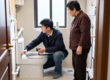
For example, for end-stage patients, medical staff can provide home hospice care services; for chronic disease patients, they can provide home nursing, traditional Chinese medicine, etc.; for patients in postoperative recovery, they can provide home rehabilitation training, etc.
Some regions have combined home visit services with disability care, conducting diverse trials. Jiangsu Province focuses on the real plight of disabled elderly—’difficulty in movement, hardship in seeking medical treatment, and lack of care’—by breaking down hospital walls, delivering medical services to the bedside of the elderly, and promoting a shift from ‘family members carrying’ to ‘doctors coming’.
It is understood that after the implementation of the home visit service fee,in 2025, a community health service center in Beijing provided home visit services such as rounds, nursing, and rehabilitation guidance to elderly, disabled, and postoperative bedridden patients in its jurisdiction, exceeding 800 person-times, a 46% increase from the previous year,,overall improving the utilization efficiency of primary medical resources.
Overall, the implementation of the ‘home visit service fee’ is expected to promote the transformation of the medical service model from hospital-centered to patient-centered.
Demonstrating the warmth of people’s livelihood
Effectively reducing patients’ medical burdens


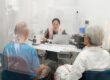
While fully mobilizing the enthusiasm of medical institutions, home visit services also make it more convenient for patients to enjoy medical services, especially for elderly patients with chronic diseases. They can reduce the transactional burden of traveling to hospitals and waiting in queues, obtain medical services without leaving home, and reduce travel risks and physical burdens. At the same time, patients can receive treatment in a more comfortable and relaxed environment. Family members can also learn and master basic nursing skills, provide care services to patients within their ability, and effectively reduce the family’s medical burdens such as transportation, hospitalization, and leave from work.
Small changes drive new transformations; quality services safeguard great health. As an important part of the National Healthcare Security Administration’s package of age-appropriate price items, the ‘home visit service fee’ not only effectively solves the past problem of lacking a unified price item for home visit services, but also exerts a price guiding role, encouraging medical institutions to extend services to households. This allows the public, especially the elderly and disabled patients, to obtain affordable and quality-assured universal medical services at their doorstep or bedside, enhancing their sense of medical access and quality of life.
1
END
1
|
Source: National Healthcare Security Administration & Diagnosis Lock World Disclaimer: This platform is dedicated to industry sharing and exchange. The article does not represent the platform’s views. Copyright belongs to the original author. If there are any errors in source attribution or infringement of your legitimate rights, please contact us, and we will promptly correct or delete them. Thank you. |